We are pleased to announce the launch of the beta version of Keyman 11 on all platforms. A beta release is a version of Keyman where we believe the features we have been working on are complete and now we will be working to tidy up loose ends and known issues before releasing a full stable version.
TLDR? Get Involved…
Keyman for Linux is entirely new for version 11. For the other platforms, our priority has been on fixing issues and improving stability, rather than introducing lots of new features. See the Keyman roadmap for more detail on where we are going in future versions.
We’ve highlighted below some of the other significant changes in 11.0. More detail is available in the change logs, and if you like, you can dig right into every line of code that we changed through our GitHub repository!
Keyman for Linux
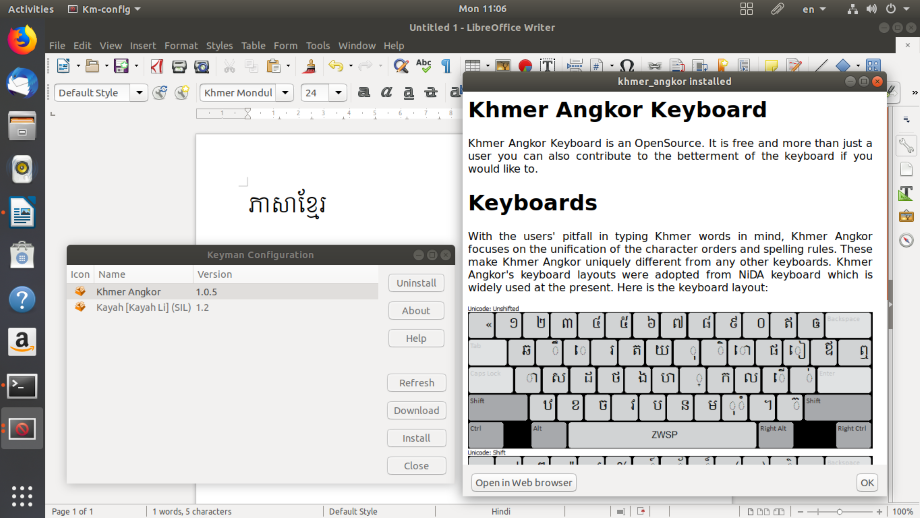
Keyman for Linux is entirely new. We took the existing KMFL project, written as a clone of Keyman Desktop many years ago, and combined it with the core of the current Keyman Desktop engine to bring full support for modern Keyman keyboards to Linux. We also built GUI tools to allow simple download and configuration of Keyman keyboards. KMFL keyboards will continue to work with Keyman for Linux — but there will be no need for keyboard developers to maintain both KMFL and Keyman versions of keyboards in the future.
Keyman Desktop
In Keyman Desktop, we fixed a whole swathe of issues that should make using Keyman an even better experience. In particular, we added support for Metro-style and Windows Store applications such as Skype or Windows Search, and improved the robustness of input with a serialized input queue.
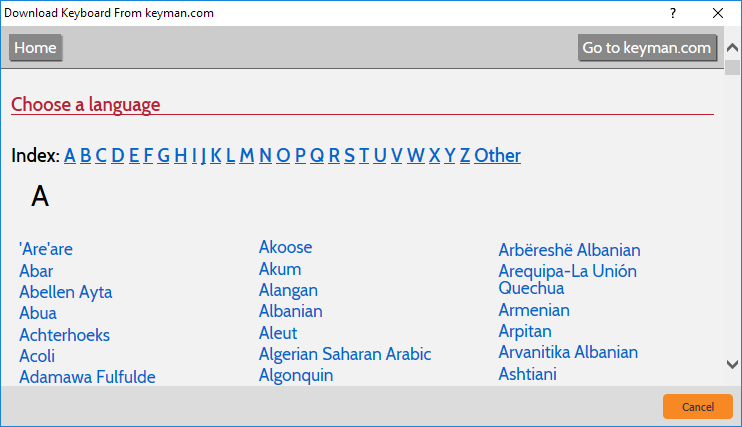
We tweaked the keyboard download dialog, and were able to make those improvements available to earlier versions of Keyman as well.
We are also grateful to @MayuraVerma for contributing a Kannada localization for Keyman 11.
Keyman for Android
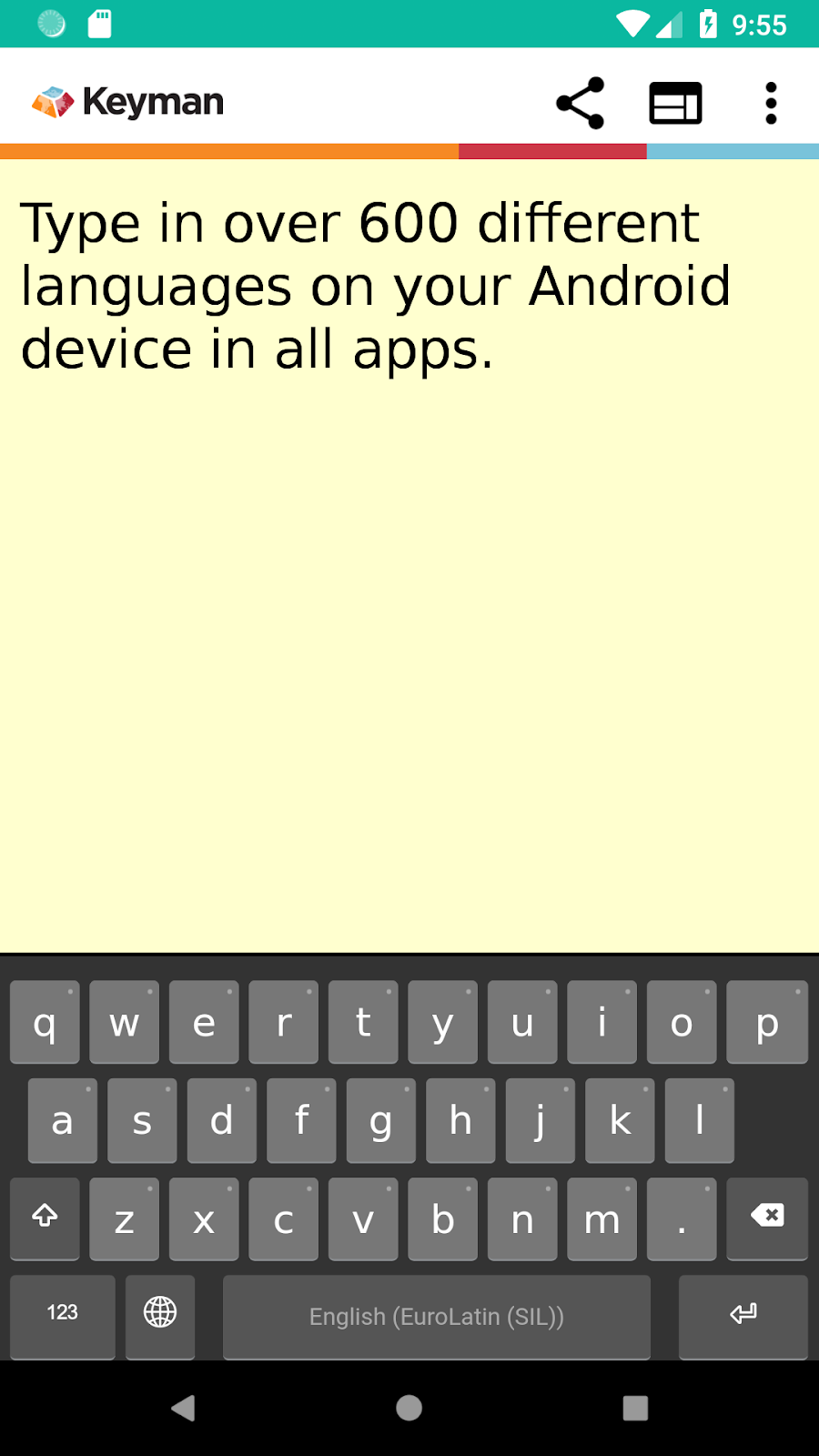
On Android, Keyman now detects digit or phone number inputs and switches to a numeric layer for those fields, and supports the extra key found on European hardware keyboards. The UI has been updated to use Material Design themes, matching the styling found in other modern Android apps. We also polished the display of diacritic marks on the keyboard. And we made many other small tweaks and fixes which should make Keyman work that much better on your Android phones and tablets.
Keyman for iPhone and iPad
Most of the work we completed in Keyman for iPhone and iPad was to address bugs and crashes. We did add support for vibrating if you type an invalid sequence, for example if you try to type the same diacritic twice on a Khmer keyboard. Device rotation support has been improved and we made sure that we support the iPhone X notch. We also polished the display of diacritic marks on the keyboard.
Keyman for macOS
In Keyman for macOS, we fixed some crashes and incorrect behaviours. We will be continuing to improve Keyman for macOS in upcoming releases.
KeymanWeb
In our web keyboard, KeymanWeb, we continued to modernise the code base and fix bugs, particularly regarding mobile device support. And we laid the groundwork for future features!
Keyman Developer
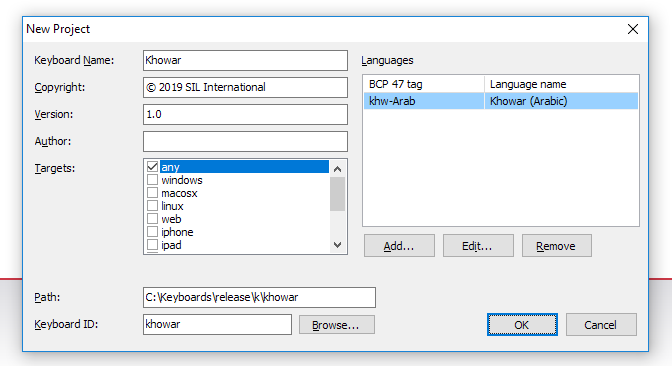
Keyman Developer got some much needed love! We removed our dependency on Internet Explorer and rewrote the web-based components such as the Project view, the Text Editor and the Touch Layout designer to use modern web standards. We added support for Project Templates and integrated open source components Chromium and Monaco for web hosting and text editing respectively. This version of Keyman Developer is now entirely free from encumbered code. Of course, we continued to improve support for open standards such as BCP 47 and fixed many funky bugs.
We are particularly excited to show off Project Templates. Project Templates make it much easier to get started creating a keyboard layout that ticks all the boxes for cross-platform support, usability and simple deployment.
Change Logs
The full change logs for this beta release across all platforms can be found below:
Get involved!
We would love to get your feedback on this beta release. We have a little pile of known issues which we are working through in preparation for the 11.0 stable release, targeted for the end of February 2019.
- Download the beta versions
- Report an issue
- Follow our progress:
- Issues we have targeted for resolution but not yet started (11.0)
- Sprint 1 (31 December – 11 January)
- Sprint 2 (14 January – 25 January)
- Sprint 3 (28 January – 8 February)
- Sprint 4 (11 February – 22 February)
1 thought on “Keyman 11.0 beta”
Jonny · January 31, 2019 at 2:42 am
Wow! That is fantastic! You guys have been very busy and productive.
Comments are closed.